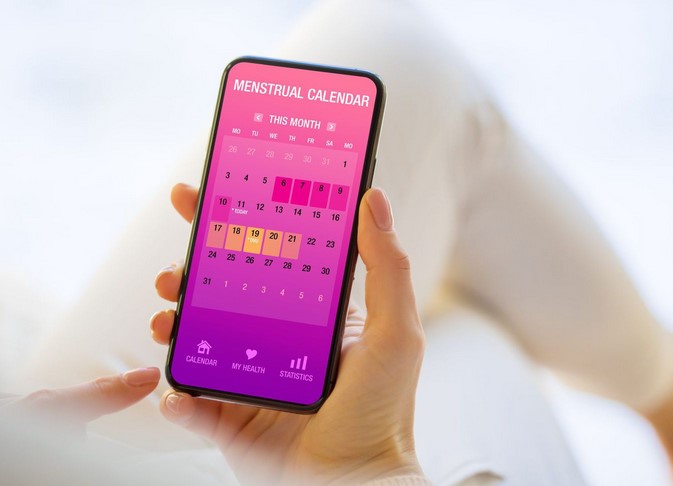
Imagine walking into an important morning meeting or stepping onto a plane for a long-awaited vacation, only to feel that sudden, unmistakable cramp. You scramble for your bag, your mind racing as you try to calculate when your last cycle actually started. Was it three weeks ago, or four? For over 80% of menstruating individuals, this exact moment of unexpected panic is an all-too-familiar disruption to daily life.
In my ten years of health writing and analyzing femtech innovations, I have evaluated dozens of digital health platforms. I have sat down with gynecologists, data privacy advocates, and hundreds of users who feel completely overwhelmed by the sheer volume of options available in the app stores.
Most people download the first app with a pink icon, input their start date, and call it a day. But out in the field, we know that your menstrual cycle is far more than just a monthly bleed—it is your fifth vital sign, offering a real-time report card on your endocrine system. Finding the right period tracker app features isn’t about tracking dates; it is about choosing a tool that helps you decode your body’s unique hormonal rhythm while aggressively safeguarding your sensitive medical data.
The Predictive Engine: Moving Beyond Simple Calendar Math
To understand why advanced period tracker app features matter, we need to demystify how these platforms actually make calculations. Basic, entry-level apps rely on simple calendar arithmetic, assuming every user operates on a rigid, textbook 28-day cycle.
Think of basic tracking like a standard car GPS that assumes there is never any traffic—it works fine until a roadblock appears. Your body’s endocrine system is highly dynamic; stress, travel, sleep, and metabolic shifts can easily delay ovulation.
+-------------------------------------------------------------+
|                PREDICTIVE ACCURACY GENERATIONS              |
+-------------------------------------------------------------+
| Gen 1: Basic Math   [ 28-Day Static Grid ] ──> High Error   |
| Gen 2: AI Engine    [ Dynamic Symptom Log ] ──> Precision   |
+-------------------------------------------------------------+
Modern, high-tier tracking platforms utilize advanced machine learning algorithms. Instead of looking solely at past dates, they analyze cross-sectional data points—such as changes in your basal body temperature, physical symptoms, and cervical mucus consistency—to map out a fluid, highly personalized prediction matrix that adapts to your life in real time.
Core Infrastructure: Essential Non-Negotiable Features
When navigating the market for a menstrual tracking app, beginners and intermediate users should look past aesthetic interfaces and focus on the technical core architecture. Here are the essential components that your platform must possess:
1. Granular Biomarker Logging
Your hormones dictate your mood, your skin quality, your digestion, and your energy levels throughout your entire cycle. A premium app should allow you to log multiple biomarkers with a single tap. Look for dedicated metrics for logging cramps, bloating, sleep disruptions, acne flare-ups, and emotional fluctuations across your follicular, ovulatory, and luteal phases.
2. Basal Body Temperature (BBT) Integration
If you are using an app for natural family planning or tracking ovulation with high accuracy, calendar counting is simply not enough. The app must feature clear graphing tools for tracking your basal body temperature. Your body experiences a subtle thermal shift of approximately $0.5^\circ\text{F}$ to $1^\circ\text{F}$ ($0.3^\circ\text{C}$ to $0.6^\circ\text{C}$) immediately following ovulation, driven by a surge in progesterone.
      THE POST-OVULATION THERMAL SHIFT

      ============================= [ Higher Progesterone Shift ]
                    /
                   / <-- 0.5°F to 1.0°F Jump
                  /
      ───────────'  <-- Ovulation Event
      Follicular Phase
3. Clear Cycle History and Statistical Export
A great app serves as a translation bridge between you and your healthcare provider. The platform should compile your data into clean, exportable PDF charts showing your average cycle length, period duration, and phase variance over a 6-month to 12-month window. This file is invaluable for your gynecologist when diagnosing conditions like Polycystic Ovary Syndrome (PCOS) or endometriosis.
The Privacy Matrix: Evaluating Security Protocols
Over my decade in the health sector, the most critical paradigm shift I have witnessed is the urgent need for absolute data sovereignty. Your menstrual data is not just a collection of numbers; it is highly intimate medical information.
| Security Feature | Technical Standard | Purpose |
| Anonymous Mode | Zero Email/Name Requirement | Prevents data correlation to your identity |
| End-to-End Encryption | AES-256 Bit Protocol | Scrambles data during cloud transit |
| Local Device Storage | On-Device Sandbox | Keeps data entirely off corporate servers |
When auditing period tracker app features, look closely at the privacy policy. Avoid apps that routinely sell user behavioral patterns to third-party advertising brokers. Prioritize platforms that offer a strict “Anonymous Mode” that lets you generate an account without linking it to an email address, phone number, or social media profile.
Expert Advice: Hidden Pitfalls in Digital Menstrual Tracking
Before you commit to entering months of personal health history into a new app, let me share two crucial pieces of job-site insight that separate basic tracking from advanced health management:
The Ovulation Prediction Trap: Never rely blindly on an app’s “green fertile window” indicator as a foolproof method for contraception. Apps guess when you ovulate based on statistical averages, but your body can easily alter its timeline due to a sudden illness or high cortisol levels. Always pair app predictions with physical bio-indicators—like ovulation predictor kits (OPKs) or cervical fluid tracking—if you are actively trying to prevent or achieve pregnancy.
-
The Notification Fatigue Blindspot: Many corporate femtech platforms crowd their interfaces with intrusive daily push notifications, generic horoscope-style wellness advice, and aggressive pop-up advertisements for premium supplements. This digital clutter causes user burnout, leading people to stop logging their symptoms entirely. Look for minimalist, science-backed user interfaces that respect your attention span and focus exclusively on clinical data.
Conclusion
Stepping into the world of digital health optimization shouldn’t feel like navigating a confusing, corporate data maze. By focusing on intentional, high-utility period tracker app features—like granular biomarker tracking, adaptive AI algorithm engines, and ironclad data privacy walls—you transform a basic calendar into a powerful health diagnostic ally. It is an accessible, empowering upgrade that puts you in total control of your reproductive wellness.
Are you looking to download your very first tracking app, or are you trying to migrate your historical data away from a platform that feels cluttered and intrusive? Let’s talk tech options—drop your questions or feature preferences in the comments section below!