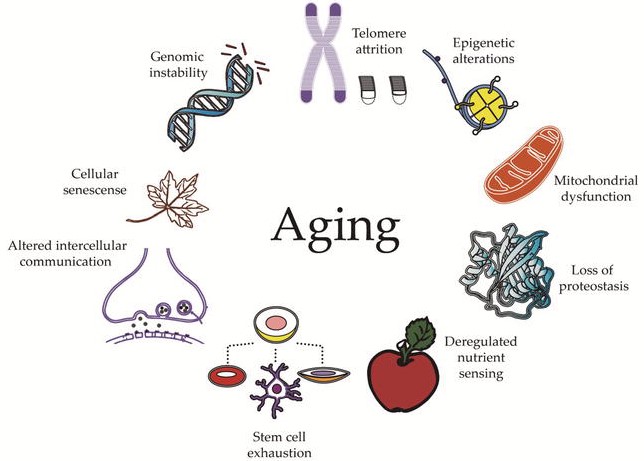
Every single day, a silent war is waged inside your body. Right now, as you sit reading this screen, your cells are being bombarded by a relentless barrage of microscopic damage. In fact, scientists estimate that the genetic material in every single one of your cells suffers up to 100,000 lesions every single day. If your body didn’t have a built-in crew to handle this chaos, your tissues would degrade within hours, and life as we know it would stop.
Over my ten years as a health researcher and writer, I’ve had the privilege of looking at cellular biomarkers from individuals across different age groups. One thing has become profile-clear: aging isn’t just a calendar tracking your birthdays; it is the physical manifestation of your cells losing the race against genetic damage.
When we talk about longevity, most people think about wrinkles, gray hair, or joint pain. But those are just the macro-level symptoms of a micro-level breakdown. Let’s look behind the curtain of DNA repair and aging to discover how your body heals itself over time—and how you can help it win the war.
The Master Blueprint: Understanding DNA Damage
To understand how your body protects itself, let’s use a simple analogy. Think of your DNA as a master architectural blueprint for a massive, living skyscraper (your body). Every time a cell divides to make a new skin cell, muscle fiber, or immune cell, it has to photocopy that blueprint.
Now, imagine that architectural office is constantly being hit by minor earthquakes, coffee spills, and ink smudges.
-
Endogenous Threats: These are internal coffee spills—things like reactive oxygen species (ROS), which are toxic byproducts of your normal metabolism. Simply breathing and turning food into energy creates cellular stress.
-
Exogenous Threats: These are the external earthquakes—things like UV radiation from the sun, environmental toxins, processed foods, and chronic stress.
If a smudge ruins a tiny part of the blueprint and you don’t fix it, the photocopy will be slightly flawed. The next copy will be even worse. Eventually, the workers building the skyscraper are reading an unreadable, garbled mess. In the world of cellular biology, this accumulation of unread blueprints is what we call genomic instability, and it is the primary driver of aging.
How Your Molecular Mechanics Fix the Blueprint
Thankfully, your cells aren’t helpless. They have a highly specialized, elite team of molecular mechanics constantly patrolling the genome. This system is known as the DNA Damage Response (DDR).
Depending on how the blueprint was damaged, the repair crew uses different strategies to fix it.
1. Base Excision Repair (BER)
Think of BER as a tiny typo corrector. If a single building block of your DNA (a nucleotide base) is damaged by an internal metabolic byproduct, a specific enzyme snips out the single bad letter and pastes in the correct one.
2. Nucleotide Excision Repair (NER)
This is the heavy-duty patch crew. When you get a sunburn, UV radiation causes whole chunks of your DNA letters to melt and stick together. NER cuts out an entire damaged section of the strand and rebuilds it perfectly from scratch using the opposite strand as a guide.
3. Double-Strand Break Repair
This is the emergency response zone. If both sides of the DNA ladder snap entirely—often due to deep radiation or severe toxic exposure—the cell faces a crisis. It will try to glue the ends back together (Non-Homologous End Joining) or find a sister chromosome to copy the missing data (Homologous Recombination). If it fails, the cell must make a drastic choice: commit suicide (apoptosis) or permanently freeze itself to prevent spreading the mutation.
The Tipping Point: What Happens to DNA Repair and Aging Over Time?
When you are 20 years old, your DNA repair crew is fast, energetic, and working around the clock. Your body handles sun exposure, poor sleep, and a bad diet relatively quickly because your repair enzymes are operating at peak capacity.
But as the decades pass, two major shifts occur that alter the balance of DNA repair and aging:
The Rise of Cellular Senescence
When a cell accumulates too much DNA damage to repair safely, it enters a state called cellular senescence. It doesn’t die, but it refuses to divide anymore. Scientists frequently call these “zombie cells.”
These zombie cells linger in your tissues, secreting inflammatory molecules that actively damage neighboring healthy cells and degrade the surrounding tissue structure.
Telomere Attrition
At the very tips of your DNA strands sit protective caps called telomeres. Every time your cells divide, these caps get a little bit shorter. Think of them like the plastic tips at the end of shoelaces. Eventually, the plastic wears off, the shoelace unravels, and the cell can no longer protect its genetic data. This telomere shortening signals the end of the cell’s productive life.
+-------------------------------------------------------------------------+
|                  THE CELLULAR AGING CASCADE                             |
+-------------------------------------------------------------------------+
| Accumulated DNA Damage -> Exhausted Repair Crew -> Zombie Cells         |
| (Senescence) -> High Chronic Inflammation -> Accelerated Tissue Aging   |
+-------------------------------------------------------------------------+
3 Pillars to Support Your Body’s Natural Repair Mechanisms
While we cannot halt the passage of time entirely, my decade in health writing has taught me that we have tremendous control over the rate at which our blueprints degrade. You can actively support your internal repair systems through three daily interventions.
1. Activate Sirtuins with Intermittent Fasting
Sirtuins are a class of proteins that act as the project managers of cell preservation. They tell the repair enzymes exactly where to go when a DNA strand breaks.
Sirtuins run on a fuel source called NAD+. As we age, our natural NAD+ levels drop drastically. One of the most effective ways to boost sirtuin activity and naturally ramp up DNA repair is through brief periods of caloric restriction or intermittent fasting. When your body isn’t processing food, it shifts its energy focus from digestion to deep cellular cleanup and repair.
2. Fuel the Fix with Micronutrients
Your repair enzymes cannot function without specific molecular helpers called cofactors. If your diet lacks raw minerals and vitamins, your repair crew is trying to build a house without hammers.
-
Zinc and Magnesium: Crucial for the structural stability of DNA binding proteins.
-
Niacin (Vitamin B3): The foundational raw ingredient your body uses to create NAD+.
-
Cruciferous Veggies: Broccoli, Brussels sprouts, and kale contain a compound called sulforaphane, which activates the Nrf2 pathway—your body’s ultimate internal antioxidant defense system.
3. Optimize Slow-Wave Sleep
DNA repair isn’t an efficient process to run while you are awake, thinking, and moving around. The peak shift for the DNA repair crew occurs during deep, slow-wave sleep. This is when your growth hormone surges and your brain clears metabolic waste. Cutting your sleep short directly deprives your body of its prime genetic maintenance window.
💡 Pro-Tip from the Field: The “Sunlight Paradox”
We know UV rays damage DNA, but completely avoiding the sun can actually impair your longevity. Moderate, mindful sun exposure (10 to 15 minutes early in the day) produces Vitamin D, which acts as a powerful hormone regulating over 1,000 genes, many of which control the cell cycle and DNA stability. Protect your skin from burning, but don’t live like a vampire; balance is key to supporting genetic health.
⚠️ Longevity Habits That Backfire
In the modern wellness community, there is a dangerous trend of “more is always better.” When trying to optimize DNA repair and aging, watch out for this major pitfall:
-
Antioxidant Megadosing: Many people swallow massive doses of isolated Vitamin C and E supplements thinking they will completely wipe out DNA-damaging free radicals.
-
The Reality Check: Your body actually needs a small amount of free radicals! Those tiny bursts of metabolic stress act as the alarms that wake up your DNA repair crew. If you completely blunt that signal with high-dose synthetic supplements, your repair enzymes stay asleep, leaving your body less resilient over time. Get your antioxidants from whole food sources instead.
Conclusion: Take Charge of Your Cellular Future
Your genetic blueprint is not a fixed, unalterable script. While you can’t control the year you were born, you have an immense amount of influence over how cleanly your blueprints are copied tomorrow. By optimizing your sleep, practicing strategic fasting, and eating to fuel your repair enzymes, you are actively helping your body heal itself from the inside out.
Aging is inevitable, but decay is malleable. Start treating your cellular repair crew with the respect they deserve.
Let’s start a conversation! What is one lifestyle habit you practice to keep your body feeling young and resilient? Have you noticed a difference in your energy levels since focusing on deep sleep or nutrition? Drop your thoughts, questions, or personal experiences in the comments below—I read and reply to every single one!