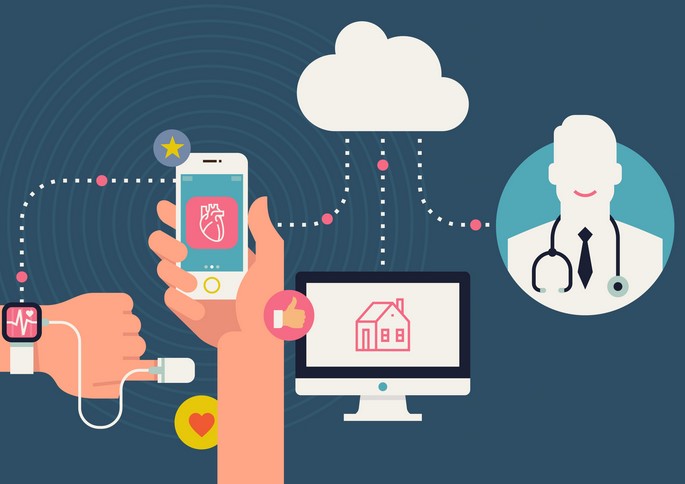
Imagine your grandfather sitting in his favorite armchair, sipping tea, while a tiny sensor on his chest silently whispers to a cardiologist ten miles away. Suddenly, the doctor’s tablet pings. Before your grandfather even feels the slight flutter in his chest—a precursor to an atrial fibrillation episode—his medical team is already calling to adjust his medication. No ambulance, no emergency room chaos, just data acting as a silent guardian.
Ten years ago, as a budding health writer, I visited a “hospital of the future” exhibit. Back then, the idea of continuous, medical-grade tracking outside of an Intensive Care Unit (ICU) felt like science fiction. Today, I see it happening in the palms of our hands. We have moved from the era of “reactive medicine”—where we only see a doctor when something breaks—to the era of Mobile Health Monitoring, where the “check-up” never actually ends.
The shift is seismic. It’s not just about counting steps anymore; it’s about decentralizing the entire healthcare system. Let’s dive deep into how this revolution is unfolding.
1. The Death of the “Snapshot” Diagnosis
In traditional medicine, a doctor’s visit is a “snapshot.” You sit on a crinkly paper-covered exam table, your blood pressure is taken, and for those ten minutes, that data point represents your health. But what if you were nervous? What if you just drank a double espresso?
From Snapshots to Feature Films
Mobile Health Monitoring turns that single snapshot into a high-definition feature film. Instead of one heart rate reading every six months, your physician can see how your heart behaves during a stressful work meeting, a deep sleep, or a morning jog.
Why Continuous Data Matters
Continuous monitoring allows for the detection of Intermittent Anomalies. Many cardiac and neurological issues are “shy”—they don’t show up during a scheduled 15-minute appointment. Wearables and mobile sensors catch these “ghosts in the machine” in real-time, providing a longitudinal view of your physiology that was previously impossible.
2. Breaking Down the Tech: Sensors, Apps, and AI
To understand the impact of Mobile Health Monitoring, we need to look under the hood. The “magic” happens through a three-tier system that I like to call the Digital Health Trinity.
-
The Collector (Sensors): These are the wearables, smart patches, or even specialized smartphone cameras. They use Photoplethysmography (PPG)—the little green lights on your watch—to measure blood flow and oxygen saturation.
-
The Translator (Mobile Apps): Raw data is useless to a human. The app translates electrical signals into charts and alerts that make sense to you and your provider.
-
The Brain (Artificial Intelligence): This is the game-changer. AI algorithms can now analyze thousands of hours of data to spot patterns that the human eye would miss, such as a subtle decline in respiratory rate that might signal an oncoming infection.
3. Managing Chronic Disease: The New Frontier
The most profound impact of Mobile Health Monitoring isn’t on the healthy “biohacker”; it’s on the millions living with chronic conditions like diabetes, hypertension, and COPD.
The “Co-Pilot” Analogy
Think of a chronic disease like flying a plane in a storm. In the old days, you had to fly manually, constantly guessing your altitude. Now, mobile monitoring acts as an Autopilot.
-
Continuous Glucose Monitors (CGM): Instead of painful finger-pricks, a tiny sensor sends real-time sugar levels to a phone. It warns the user before they hit a dangerous low.
-
Smart Blood Pressure Cuffs: These sync automatically with a patient’s electronic health record, allowing doctors to manage “White Coat Hypertension” and adjust prescriptions without an office visit.
Remote Patient Monitoring (RPM)
I’ve observed that patients using RPM feel a significantly higher “sense of safety.” They know that even when they are home, they aren’t alone. This psychological boost is often just as important as the clinical data itself.
4. The Rise of the “Patient-Consumer”
Mobile health tech is shifting the power dynamic in the exam room. We are moving away from a “Doctor Says, Patient Does” model to a collaborative partnership.
Data-Driven Conversations
When a patient walks into a clinic with three months of organized sleep data and heart rate variability (HRV) trends, the conversation changes. We are no longer guessing. As a writer who has interviewed dozens of clinicians, I’ve heard a common theme: Informed patients achieve better outcomes.
Personalized Preventive Care
We are all “N-of-1.” Your body doesn’t react to stress or food exactly like mine does. Mobile Health Monitoring allows for Precision Medicine. We can finally see exactly which lifestyle changes move the needle for us specifically, rather than following generic advice from a pamphlet.
💡 Pro Advice: The “Data Fatigue” Warning
While more data is generally better, there is a hidden risk I call Health Anxiety Overload. Not every spike in your heart rate or dip in your “sleep score” is a medical emergency.
Tips Pro: Use mobile monitoring for trends, not isolated incidents. If your resting heart rate is gradually increasing over two weeks, that’s a trend worth discussing. If it’s high for one hour after a spicy meal, that’s just life. Don’t let your tracker become a source of stress—stress itself is a physiological data point you want to keep low!
5. Overcoming the Hurdles: Privacy and Accuracy
It’s not all sunshine and smartwatches. As we lean further into Mobile Health Monitoring, we face two massive challenges: Data Privacy and Clinical Validation.
Is Your Data Safe?
Your health data is more valuable on the dark web than your credit card number. As we sync our heartbeats to the cloud, the industry is racing to implement End-to-End Encryption and stricter HIPAA-style regulations for tech companies. I always tell my readers: Always read the privacy policy of your health app. If you aren’t paying for the product, your data might be the product.
The Accuracy Gap
There is a difference between a “wellness device” and a “medical device.”
-
FDA Clearance: Look for devices that are FDA-cleared. This means the manufacturer has proven the device’s accuracy is high enough to be used for medical decisions.
-
The “Consumer Grade” Trap: Many cheap wearables use lower-quality sensors that can be “noisy,” leading to false alarms. When in doubt, verify a wearable’s reading with a traditional medical tool.
6. The Future: From Wearables to “Inside-ables”
What comes next? We are already seeing the transition from external wearables to Bio-Integrated Sensors.
The Next Five Years
We are moving toward smart contact lenses that monitor glucose in tears and “smart pills” that can track internal inflammation as they pass through your digestive tract. The goal of Mobile Health Monitoring is to become invisible. The most successful technology is the one you forget you’re wearing—it simply becomes a part of your biological “operating system.”
Global Health Equity
Perhaps the most inspiring part of this journey is the potential for global reach. In rural areas where the nearest hospital is a day’s journey away, a smartphone and a mobile sensor can provide life-saving diagnostics. We are literally putting a laboratory in the pockets of the underserved.
Conclusion: Becoming the CEO of Your Health
Mobile Health Monitoring is more than just a collection of gadgets; it is a fundamental shift in the human experience. It demands that we take more responsibility for our daily choices while providing us with the tools to do so effectively.
Healthcare is no longer a destination you visit; it is a companion that walks with you. By embracing these tools thoughtfully, we aren’t just living longer—we are living smarter.
Are you currently using any mobile health tools to track your vitals? Have they changed the way you view your daily habits? I’d love to hear your “success stories” or even your frustrations in the comments below!