Five years ago, a chronic stress patient sat in my consultation room, gripping her seat so tightly her knuckles were white. Her heart was racing at 110 beats per minute, her shoulders were raised to her ears, and her breathing was shallow and rapid. When I gently pointed out how tense her body was, she looked at me with genuine confusion and said, “I feel completely fine—this is just how my body normally is.”
Her response highlighted a profound issue in modern wellness: most of us are completely disconnected from our body’s real-time physiological signals. We live in a state of perpetual low-grade fight-or-flight, blissfully unaware of the damage it causes to our nervous systems until burnout or chronic illness forces us to pay attention.
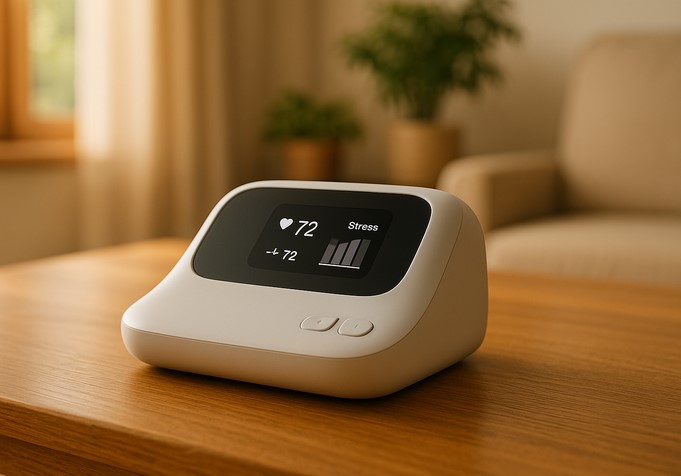
Over my ten years in health research and clinical physiology, I’ve watched technology revolutionize how we bridge this mind-body gap. Modern biofeedback devices have evolved from clunky clinical monitors into sleek, accessible tools that let you see, understand, and master your involuntary bodily functions in real time.
What Is Biofeedback, and How Does the Technology Work?
At its core, biofeedback is the process of measuring involuntary physiological activities—like heart rate, muscle tension, skin temperature, and brainwaves—and translating them into visual or auditory cues.
Think of your autonomic nervous system like a luxury car driving at night without a dashboard. You might feel the engine strain or hear the tires screech, but you have no speedometer or fuel gauge to tell you what is actually happening under the hood. A biofeedback device acts as that digital dashboard, providing precise instrument readings so you can adjust your driving before the engine overheats.
When you observe your real-time biometric data on a screen or smartphone app, your brain begins to recognize subtle internal cues. Through practice, you learn to consciously modulate autonomic functions that were once thought to be completely beyond conscious control.
The Biomarkers Modern Devices Track
Consumer and clinical tools typically track one or more of these core physiological metrics:
-
Heart Rate Variability (HRV): The subtle variation in time between consecutive heartbeats, serving as a primary indicator of nervous system resilience and stress levels.
-
Electromyography (EMG): Measures electrical activity in skeletal muscles to identify unperceived physical tension and postural stress.
-
Galvanic Skin Response (GSR): Tracks sweat gland activity, offering a direct window into sympathetic nervous system arousal.
-
Thermal Biofeedback: Measures peripheral skin temperature, which drops during stress due to vasoconstriction in the extremities.
-
Electroencephalography (EEG): Tracks brainwave activity (Alpha, Theta, Beta waves) to train focus, meditation depth, and relaxation.
How Biofeedback Devices Accelerate Physical and Mental Healing
1. Training Autonomic Resilience via HRV Regulation
When you experience chronic mental stress, your sympathetic nervous system (the “fight-or-flight” branch) dominates, suppressing your parasympathetic system (the “rest-and-digest” branch). Low Heart Rate Variability is strongly linked to anxiety, fatigue, and cardiovascular risk.
Using an HRV biofeedback monitor paired with resonant breathing techniques (typically 5.5 to 6 breaths per minute) trains your cardiovascular and respiratory systems to synchronize. In my practice, I’ve seen clients increase their baseline HRV by 35% within six weeks of daily ten-minute training sessions, leading to deeper sleep and improved emotional stability.
Stress Trigger ➔ Real-Time GSR/HRV Feedback ➔ Targeted Resonant Breathing ➔ Parasympathetic Activation
2. Eliminating Unconscious Muscle Tension with EMG Feedback
Unconscious muscle bracing is a primary cause of tension headaches, chronic neck pain, and temporomandibular joint (TMJ) dysfunction. Most people hold tension in their jaw or trapezius muscles without realizing it.
Surface EMG biofeedback devices provide immediate auditory or visual alerts when muscle activity exceeds a safe microvolt threshold. By linking physical sensations with live sensor data, patients quickly re-learn what true muscular relaxation feels like.
| Biometric Signal | Clinical Application | Primary Health Benefit |
| HRV (Heart Rate Variability) | Stress resilience & anxiety management | Improved emotional regulation and recovery |
| EMG (Electromyography) | Chronic pain & tension headache relief | Reduced muscle bracing and postural strain |
| GSR (Skin Conductance) | Panic attack & trauma regulation | Faster dampening of acute stress spikes |
| EEG (Neurofeedback) | Focus enhancement & insomnia training | Greater cognitive clarity and sleep efficiency |
Step-by-Step Guide: Selecting and Using the Right Device
Step 1: Match the Device to Your Specific Health Goal
Not all tools are created equal. Before buying, define what primary physiological system you need to regulate.
-
For Stress, Anxiety, and Sleep: Look for wearable HRV sensors or optical pulse monitors with dedicated resonance breathing apps.
-
For Concentration and Meditation: Choose light consumer EEG headbands that track neural oscillations during mindfulness sessions.
-
For Chronic Pain or Rehabilitation: Select surface EMG patches that monitor specific muscle groups during daily activities.
Pro Tip: Look for devices that provide raw data access or validated clinical-grade sensors rather than arbitrary “stress scores.” Understanding actual millisecond HRV values or microvolt EMG signals gives you much better long-term insight than an opaque proprietary score.
Step 2: Establish a Baseline Before Intervening
When unboxing a new device, resist the urge to immediately jump into active biofeedback exercises. Spend the first 5 to 7 days simply recording your baseline metrics during normal daily activities, sleep, and stressful moments. Establishing an accurate baseline prevents false assumptions about your body’s physiological patterns.
Hidden Pitfalls: What Most Marketing Leaves Out
While wearable health technology has advanced dramatically, consumer tools come with specific limitations that every user must understand to avoid frustration.
-
Data Anxiety (The “Quantified Self” Paradox): Fixating constantly on biometric scores can actually trigger stress responses—a phenomenon known as orthosomnia in sleep tracking. If checking your stress score increases your heart rate, step back from the device for a few days.
-
Motion Artifacts and Sensor Limitations: Consumer-grade optical sensors (PPG) worn on the wrist are susceptible to motion noise. For accurate HRV biofeedback during active movement, chest strap monitors or stationary finger sensors are far superior.
-
Expecting Passive Results: A biofeedback device is not a treatment in itself; it is an educational feedback loop. The device simply shows you the map; you still have to do the mental and respiratory work to change your physiology.
Hidden Trap Alert: Be cautious when using neurofeedback (EEG) devices without professional guidance if you have a history of severe clinical depression, traumatic brain injury (TBI), or PTSD. Altering brainwave states without proper protocol management can occasionally trigger unexpected mood fluctuations or fatigue.
Reclaiming Autonomy Over Your Health
The ultimate goal of using biofeedback devices isn’t to remain tethered to screen monitors and wearable sensors for the rest of your life. The true power of this technology lies in training your internal awareness so deeply that the external screen eventually becomes unnecessary.
When you learn to read your body’s subtle warnings—the quiet shift in your breath, the slight drop in skin temperature, the micro-tension in your jaw—you gain the power to regulate your nervous system before stress turns into disease.
Have you ever used a biofeedback tool, HRV monitor, or smart wearable to track your body’s stress response? What changes did you notice in your daily health habits? Drop your experiences or questions in the comments below—I’d love to join the conversation!