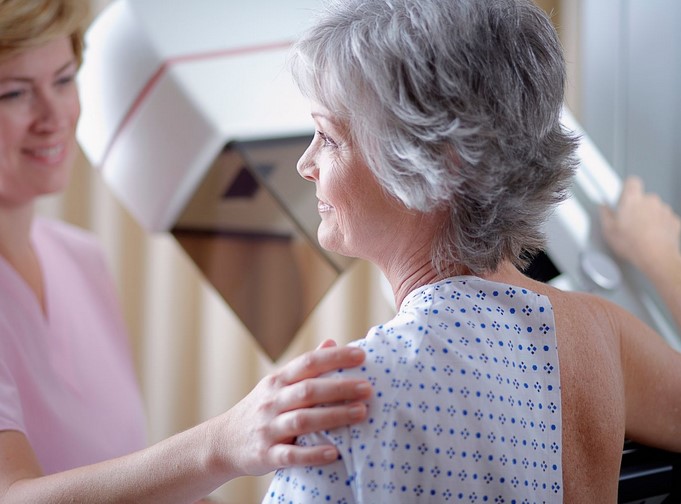
The waiting room of a radiology clinic has a very specific kind of silence. It’s heavy, punctuated only by the rustle of outdated magazines and the occasional nervous tap of a foot. In my decade spent navigating the healthcare industry, I’ve sat in those chairs alongside women from all walks of life. I’ve seen the “scanxiety”—that paralyzing fear that hangs between the moment the technician positions the machine and the moment the doctor delivers the results.
Statistically, 1 in 8 women in the United States will develop breast cancer in her lifetime. That is a jarring number, but here is the insight that only those of us in the field truly see: the difference between a survivor and a tragedy often boils down to a single date on a calendar. Breast Cancer Screening Guidelines aren’t just bureaucratic suggestions; they are the most powerful navigation tools we have to find the “needle in the haystack” before the haystack catches fire.
Let’s demystify the latest protocols and help you understand exactly when, how, and why you should be screened.
1. The Core Objective: Finding the “Seed” Before the “Tree”
To understand why Breast Cancer Screening Guidelines shift over time, we have to understand the biological goal. Breast cancer doesn’t happen overnight. It starts as a microscopic error in cell division.
The Smoke Detector Analogy
Think of a mammogram like a smoke detector in your house. You don’t wait for the flames to be visible from the street before you install one. You want the alarm to go off the second a tiny wisp of smoke is detected in the attic. Screening is our smoke detector—it’s designed to find asymptomatic changes, meaning things you cannot feel with your fingers during a shower.
Early Detection and Survival Rates
When breast cancer is caught in its localized stage (before it has spread to lymph nodes or other organs), the 5-year relative survival rate is nearly 99%. However, that percentage drops significantly once the “tree” has grown deep roots. This is why we focus so heavily on the timing of your first mammogram.
2. Navigating the Age 40 Milestone: The New Standard
For years, there was a heated debate among medical organizations about whether to start regular screening at age 40 or 50. As of 2024, the consensus among major bodies like the USPSTF (U.S. Preventive Services Task Force) has shifted decisively.
The Current Recommendations
-
Ages 40 to 74: Women at average risk should get a screening mammogram every two years (biennial).
-
The “Start at 40” Shift: This change was prompted by a rising incidence of breast cancer in younger women and the fact that screening starting at 40 saves about 20% more lives than waiting until 50.
-
Personalized Timing: If you have a significant family history, your “start date” might be even earlier—often 10 years before the age your youngest relative was diagnosed.
In my experience, the “average risk” label can be misleading. Many women assume that because no one in their family had breast cancer, they are safe. In reality, about 75% of women diagnosed with breast cancer have no family history at all.
3. Understanding Your Screening Tools: Beyond the Standard Mammogram
Not all breasts are created equal, and neither are the tools we use to look at them. Standard Breast Cancer Screening Guidelines usually focus on 2D or 3D mammography, but there are other “specialists” in the toolkit.
3D Mammography (Digital Breast Tomosynthesis)
If you have the choice, always opt for 3D. While a 2D mammogram is like looking at a book from the outside, a 3D mammogram allows the radiologist to flip through the pages one by one. It significantly reduces the rate of “false positives” (false alarms) and is much better at spotting small tumors.
The Challenge of Dense Breasts
About 40-50% of women have dense breast tissue. On a mammogram, both dense tissue and tumors appear white. It’s like trying to find a snowball in a blizzard.
-
Supplemental Screening: If you are told you have “dense breasts” (Category C or D on your report), your doctor may recommend an Ultrasound or an MRI in addition to your mammogram to get a clearer picture.
4. Technical Insight: BI-RADS Scores and What They Mean
When you receive your screening report, you’ll see a section called BI-RADS (Breast Imaging-Reporting and Data System). This is the universal language radiologists use to communicate.
| BI-RADS Category | What it Means | Action Required |
| Category 0 | Incomplete | Need more images or a previous mammogram for comparison. |
| Category 1 | Negative | Routine screening in 2 years. |
| Category 2 | Benign (Non-cancerous) | Routine screening. Usually cysts or fibroadenomas. |
| Category 3 | Probably Benign | Short-term follow-up (usually in 6 months) to monitor. |
| Category 4 | Suspicious | A biopsy is typically recommended. |
💡 Tips Pro: Timing is Everything
If you are pre-menopausal, try to schedule your mammogram for the week after your period. During your cycle, hormonal fluctuations can make breast tissue more tender and swollen, which can make the compression more uncomfortable and the images slightly harder to read.
Do not wear deodorant, powder, or lotion on the day of your exam. Many of these products contain aluminum or minerals that can appear as “calcifications” (white spots) on the X-ray, leading to unnecessary stress and re-tests.
5. The Role of Genetic Testing (BRCA1 and BRCA2)
While the general Breast Cancer Screening Guidelines apply to the majority, about 5-10% of breast cancers are hereditary.
If you have a strong family history (especially multiple relatives or young diagnoses), you should discuss genetic counseling. Mutations in the BRCA1 or BRCA2 genes significantly increase the risk. For these high-risk individuals, the guidelines change drastically, often involving annual MRIs and mammograms starting as early as age 25 or 30.
6. Self-Awareness: The “Check Yourself” Philosophy
You might have heard that “Self-Breast Exams” are no longer formally recommended by some groups because they haven’t been proven to reduce mortality. However, as a health writer, I disagree with the idea of ignoring your own body.
We call it Breast Self-Awareness. You should know your “normal.”
-
What to look for: New lumps, dimpling of the skin (like an orange peel), nipple discharge, or a nipple that has suddenly turned inward.
-
The Mirror Test: Look at your breasts with your arms at your sides, then with your arms raised. Notice any changes in contour or symmetry.
Your fingers can’t replace a mammogram, but they can certainly tell you when something has changed between your scheduled screenings.
7. Overcoming the “Fear Factor” of Screening
The biggest barrier to following Breast Cancer Screening Guidelines isn’t usually cost or access—it’s fear. Fear of pain, and fear of what might be found.
Let’s be honest: a mammogram isn’t a spa day. It involves compression that can be uncomfortable for about 10 to 15 seconds. But that discomfort is a small price for the peace of mind it provides. Most women find the anticipation of the mammogram to be much worse than the actual procedure.
Conclusion: Take Charge of Your Timeline
Understanding Breast Cancer Screening Guidelines is about moving from a place of “what if” to a place of “I know.” We have reached a point in medical history where breast cancer, when caught early, is highly treatable and survivable.
Don’t wait for a symptom to appear. If you are 40 or older, or if you have a family history that concerns you, call your primary care physician this week. Screening is the ultimate act of self-care—it is your way of telling your future self that her health is worth the effort today.
Have you had your first mammogram yet, or are you approaching the age 40 milestone? If you’ve been through the process, what’s one piece of advice you’d give to a first-timer? Let’s share our stories in the comments below.