Imagine walking up a simple flight of stairs and suddenly feeling like you are trying to breathe through a paper-thin cocktail straw. Your chest constricts, your heart races, and a wave of panic sets in as your lungs refuse to catch enough air.
Over my decade as a health writer—working closely with pulmonologists, respiratory therapists, and patients navigating chronic illness—I have seen this terrifying moment happen over and over again. For millions living with Chronic Obstructive Pulmonary Disease (COPD), short walks or routine household chores can trigger a sudden respiratory struggle.
The good news is that learning targeted COPD breathing techniques offers a practical, life-changing toolkit to regain control over your breath, calm your nervous system, and restore daily independence.
What Is COPD and Why Does Breathing Feel So Hard?
To understand how targeted breathing exercises work, we must first look at what happens inside lungs affected by COPD—an umbrella term covering conditions like chronic bronchitis and emphysema.
Think of healthy lungs as a set of fresh, springy balloons.
[ Healthy Lungs ] ==> Fresh Balloons (Inhale easily, deflate completely)
=============================================================================
[ COPD Lungs ]    ==> Over-stretched Balloons (Inhale OK, trap stale air inside)
When you have COPD, your lung tissue loses its natural elasticity, and airways become inflamed or obstructed. Air goes in, but the lungs cannot deflate completely, leading to hyperinflation—a condition where stale, oxygen-poor air stays trapped in the lower airways. Because there is no empty space left, taking your next fresh breath feels like trying to inflate a balloon that is already full.
Key Terminology to Know
Understanding the physiology of respiration helps you practice these techniques effectively:
-
Air Trapping: The inability to fully exhale stale air, leading to hyperinflation of the pulmonary system.
-
Diaphragm: The dome-shaped primary breathing muscle located beneath the lungs that contracts to pull air inward.
-
Dyspnea: The clinical term for severe, uncomfortable shortness of breath or air hunger.
Core COPD Breathing Techniques You Need to Master
When breathlessness strikes, panic naturally forces you to take quick, shallow chest breaths. This actually worsens air trapping. Replacing those panic reactions with structured exercises helps clear trapped air and improves oxygen exchange.
PANIC RESPIRATION                        STRUCTURED COPD TECHNIQUE
(Shallow & Rapid Chest Breaths)          (Pursed-Lip & Diaphragmatic)
+----------------------------+            +---------------------------------+
| Traps Stale Air in Lungs   |            | Creates Backpressure in Airways |
| Heightens Anxiety Response |   ===>     | Empties Trapped CO2 Completely  |
| Strains Neck & Shoulders   |            | Activates Parasympathetic Calm  |
+----------------------------+            +---------------------------------+
1. Pursed-Lip Breathing
This is the foundational skill for managing sudden attacks of dyspnea. It slows down your breathing pace and keeps airways open longer.
-
Inhale: Breathe in slowly through your nose for 2 seconds with your mouth closed.
-
Purse Your Lips: Pucker your lips as if you were about to whistle or blow out a birthday candle.
-
Exhale: Breathe out gently and steadily through your pursed lips for 4 seconds (twice as long as your inhale).
Why it works: Exhaling against resistance creates a small amount of positive backpressure that holds small airways open, allowing trapped carbon dioxide to escape.
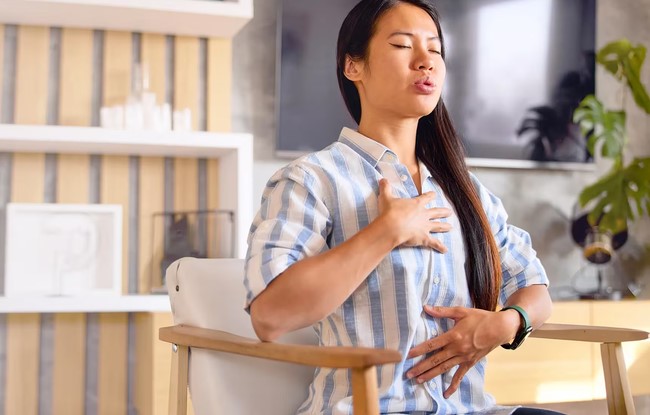
2. Diaphragmatic Breathing (Belly Breathing)
COPD often forces people to rely on weak accessory muscles in the neck and shoulders. Diaphragmatic breathing retrains your main respiratory muscle to do the heavy lifting.
-
Setup: Lie on your back or sit comfortably in an armchair with relaxed shoulders.
-
Hand Placement: Place one hand on your upper chest and the other on your stomach just below your ribcage.
-
Inhale: Breathe in slowly through your nose; your stomach should rise against your hand while your chest stays as still as possible.
-
Exhale: Exhale slowly through pursed lips, feeling your stomach fall inward as your diaphragm relaxes upward.
Rescue Positions: How to Position Your Body During Dyspnea
When you experience sudden shortness of breath, combining COPD breathing techniques with mechanical body positioning gives your diaphragm an immediate structural advantage.
| Position Name | How to Perform | Biological Advantage |
| Tripod Position (Sitting) | Sit on a chair, lean slightly forward, and rest your elbows on a table or knees. | Takes pressure off the diaphragm and fixes shoulder girdles so accessory muscles can assist breathing. |
| Standing Lean-Forward | Stand leaning forward slightly, resting your hands or forearms on a sturdy counter or windowsill. | Relieves abdominal pressure on the lungs and stabilizes upper body posture. |
| Supported Back Lean | Lean your back and shoulders flat against a wall, keeping feet slightly forward and knees relaxed. | Supports postural muscles, reducing overall body energy expenditure during recovery. |
Comparative View: Everyday Breathing vs. COPD-Focused Methods
| Metric | Unmanaged COPD Respiration | Controlled COPD Technique |
| Breathing Rate | 20–30+ shallow breaths per minute | 8–12 slow, controlled breaths per minute |
| Primary Muscles Used | Neck, upper chest, and shoulder muscles | Diaphragm and abdominal muscles |
| Exhale Duration | Short, incomplete exhalations | Prolonged exhalations (1:2 inhale-to-exhale ratio) |
| Carbon Dioxide Level | High risk of CO2 retention and fatigue | Optimal CO2 clearance and improved oxygenation |
Expert Advice: Practical Insights for Respiratory Care
During my years reviewing clinical workflows, I have gathered key observations that turn basic exercises into long-term safety habits:
+-----------------------------------------------------------------------+
|                    PRO INSIGHT: THE 1:2 RATIO RULE                    |
|                                                                       |
| Always ensure your exhalation is twice as long as your inhalation.    |
| If you inhale for 2 seconds, exhale for 4. If you inhale for 3        |
| seconds, exhale for 6. Focus entirely on emptying the lungs first;   |
| the fresh air will naturally follow.                                  |
+-----------------------------------------------------------------------+
💡 Pro Tip for Daily Living
Pace your activities using “Exertion Exhalation.” Always exhale while performing the hardest part of any physical movement. For example, exhale through pursed lips as you stand up from a chair, reach up into a kitchen cabinet, or step up onto a curb—then inhale through your nose when you rest.
⚠️ Hidden Warning for Patients and Caregivers
Never force hyperventilation or hold your breath. Forcing rapid deep breaths can increase air trapping and cause severe dizziness. If you experience chest tightness, coughing fits, or blueness around your lips or fingernails, stop exercising immediately and follow your medical emergency plan.
Reclaiming Confidence and Quality of Life
Living with chronic respiratory conditions presents daily physical challenges, but practicing structured COPD breathing techniques gives you direct control over your symptoms.
By practicing pursed-lip breathing and diaphragmatic exercises during quiet moments every day, these techniques will become automatic instincts when shortness of breath strikes. Small, consistent respiratory habits build the foundation for a more active, confident, and independent life.
Share Your Experience
Have you or a family member tried pursed-lip or belly breathing during daily activities? Which position or technique helps you regain your breath fastest?
Drop your thoughts, personal tips, or questions in the comments below—let’s support each other on this health journey!