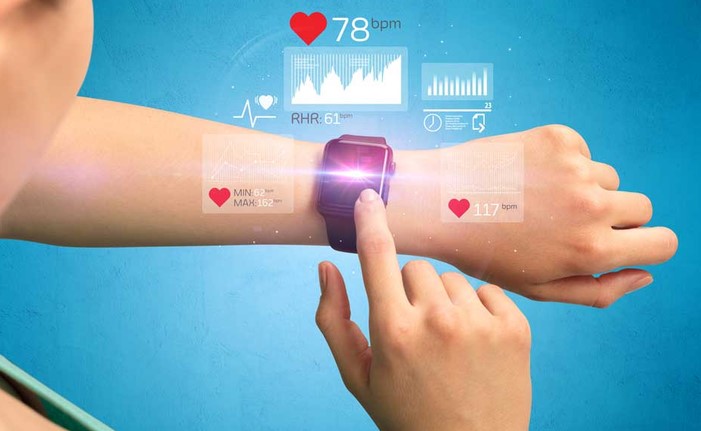
Have you ever woken up after a solid eight hours in bed, only to feel like you just ran a marathon in your sleep? A decade ago, when I first started writing about health and fitness technology, solving this mystery required a costly, cumbersome sleep study in a sterile clinical lab. Today, the answer to your mysterious exhaustion is likely strapped right to your wrist.
We are officially living in the golden age of health monitoring wearables.
Over my 10 years working in the health sector, I’ve tested hundreds of devices and watched them evolve from glorified pedometers that simply counted your steps into sophisticated, miniaturized health clinics. Whether you are a casual jogger aiming to get fit or someone actively managing a chronic condition, understanding how to leverage this technology can completely transform your relationship with your body.
The Evolution of Health Monitoring Wearables
When fitness trackers first hit the mainstream market, they were incredibly basic. They relied on simple motion sensors to guess how much you were moving. If you waved your arms while sitting on the couch, congratulations—you just “walked” fifty steps!
Today’s health monitoring wearables are a completely different beast. They are powered by advanced biometric sensors and complex machine learning algorithms that process thousands of data points per second. We have moved far beyond just tracking steps and calories. Modern smartwatches and fitness bands can now monitor everything from your skin temperature and blood oxygen levels to the electrical activity of your heart.
As someone who has spent years dissecting medical journals and tech specs, I can confidently tell you: the gap between consumer wearables and medical-grade equipment is closing faster than anyone anticipated.
How Do These Tiny Gadgets Actually Work?
To get the most out of your device, it helps to understand the magic happening beneath the screen. Let’s break down the technical jargon into something that actually makes sense.
The Magic of Photoplethysmography (PPG)
If you flip your smartwatch over, you’ll likely see a flashing green or red light. This is your PPG sensor.
Think of your blood vessels like a busy highway at night. The PPG sensor acts like a high-tech traffic camera. It shines a light into your skin and measures how much of that light bounces back. Because blood absorbs light, the sensor can detect the exact moment your heart pumps a fresh wave of blood (a pulse) through your wrist. This is how your wearable tracks your resting heart rate with incredible precision.
Accelerometers and Gyroscopes
These are the spatial awareness tools of your device.
-
The Accelerometer: Measures linear movement (up, down, side to side).
-
The Gyroscope: Measures rotation and twist.
Together, they don’t just know you are moving; they know how you are moving. They can tell if you are swimming freestyle, cycling, or tossing and turning in your sleep.
Key Biometric Metrics You Should Actually Care About
With so much data on your wrist, it is easy to suffer from information overload. Here are the most critical metrics your health monitoring wearables track, and why they matter:
-
Heart Rate Variability (HRV): This is the holy grail of recovery metrics. HRV measures the microscopic variations in time between your heartbeats. A higher HRV generally means your nervous system is relaxed and ready to tackle the day, while a low HRV indicates stress, fatigue, or impending illness.
-
Blood Oxygen Saturation (SpO2): This measures how efficiently oxygen is traveling through your bloodstream. Normal readings are typically between 95% and 100%. Consistent drops during the night can be an early warning sign of sleep apnea.
-
Sleep Stages: It’s not just about how long you sleep, but how well you sleep. Wearables track your light, deep, and REM sleep cycles, helping you understand if your brain is actually getting the restorative rest it needs.
-
VO2 Max: Think of this as your body’s horsepower. It measures the maximum amount of oxygen your body can utilize during intense exercise. It is one of the best overall indicators of cardiovascular fitness.
Expert Advice: Maximizing Your Health Monitoring Wearables
After a decade of troubleshooting health tech, I’ve noticed that most people make the same simple mistakes. Here is how to get the most accurate data out of your device:
Pro Tip 1: The “Two-Finger” Rule
For your PPG sensors to work correctly, your wearable needs a snug fit. Wear the device about two finger-widths above your wrist bone. This prevents the watch from sliding around during workouts, ensuring a consistent heart rate reading.
Pro Tip 2: Establish a Baseline First
Don’t panic if your first week of data looks chaotic. Wearables need time to learn your unique physiology. Wear your device consistently for at least 14 days—especially while sleeping—to establish a personal baseline before you start drawing conclusions about your health.
The Hidden Warning: Don’t Let Data Drive You Crazy
As a health writer, I must issue a crucial warning: Data should guide you, not diagnose you or dictate your life.
There is a growing phenomenon in the medical community called Orthosomnia—an unhealthy obsession with achieving perfect sleep data. I’ve seen clients wake up feeling wonderfully refreshed, only to ruin their own mood because their smartwatch gave them a “poor” sleep score.
Remember, these algorithms are built for the average population, and you are an individual. If your wearable says you had a terrible night of sleep, but you feel energized and sharp, trust your body over the machine. Health monitoring wearables are incredible tools for spotting long-term trends, but they are not a replacement for how you actually feel, nor do they replace a licensed doctor.
Time to Take Charge of Your Health
Health monitoring wearables have democratized personal health data. You no longer have to wait for an annual check-up to know how your heart is performing or how your lifestyle is impacting your stress levels. By tracking your biometrics, you are equipped to make smarter, proactive choices every single day.
Are you currently using a smartwatch or fitness tracker to monitor your health? What is the one metric you check first thing every morning? Drop a comment below and let’s discuss how technology is shaping your wellness journey!