The 3 AM Reality Check: Are You Ready for the Rig?
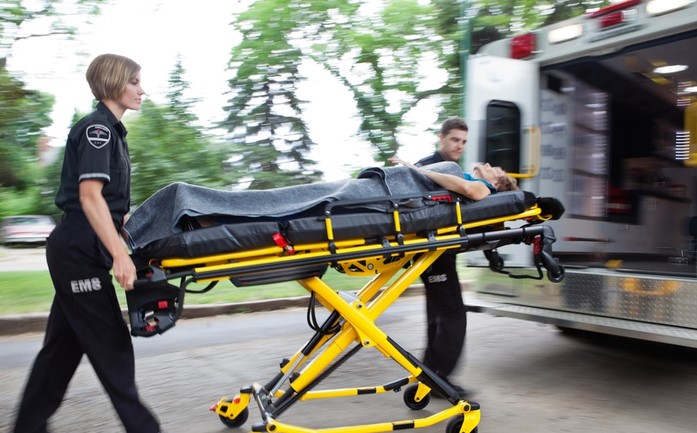
It’s 3:14 AM. The radio cracks to life, shattering the silence of the station. “Unit 42, respond to a multi-vehicle collision, priority one.” In less than two minutes, you are strapped into a ten-ton ambulance, sirens wailing, heart pounding against your ribs.
When you arrive, chaos reigns. People are screaming, metal is twisted, and someone’s life is entirely in your hands. In my decade as a health writer embedding with emergency medical teams, I’ve watched this exact scenario play out countless times. I’ve seen the sheer panic in a bystander’s eyes—and the absolute, chilling calm of an Emergency Medical Technician (EMT) stepping out of the rig.
But here is the secret: that calm isn’t a personality trait. It is a highly engineered response built through grueling education. If you are looking to step into those boots, you are probably wondering exactly what it takes to earn the patch.
Navigating the EMT training requirements can feel overwhelming if you don’t know where to look. Let’s break down exactly what you need to know, from the classroom to the streets, so you can transform from an everyday civilian into a frontline first responder.
Core EMT Training Requirements: The Blueprint of a First Responder
Becoming an EMT isn’t a casual weekend commitment. It usually takes anywhere from 12 to 16 weeks (roughly 120 to 150 hours) of intensive coursework. The curriculum is rigidly structured by national and state standards.
To make sense of it, think of EMT training like building a house. You need a solid foundation (prerequisites), a strong frame (classroom knowledge), and functional plumbing and electricity (hands-on skills) before anyone can actually live in it.
Here is how the standard EMT training requirements are structured.
1. The Foundation: Basic Prerequisites
Before you even touch a stethoscope, there are a few administrative hurdles to clear. While specific schools might vary slightly, the universal baseline includes:
-
Age and Education: You must be at least 18 years old and hold a High School Diploma or GED.
-
BLS Certification: You usually need an active Basic Life Support (BLS) for Healthcare Providers card from the American Heart Association.
-
Clean Background Check: You will undergo a strict criminal background check and a multi-panel drug screening.
-
Immunizations: Expect to provide proof of vaccines, including Hepatitis B, MMR, Varicella, Tdap, and a recent negative TB test.
2. Didactic Learning: The Classroom Grind
The “didactic” portion is where you sit in a classroom and absorb medical theory. This is the hardest part for many hands-on learners. You are going to learn human anatomy, physiology, medical terminology, and pharmacology.
You will cover distinct medical emergencies: cardiology, neurology, endocrinology, and trauma. You’ll learn the difference between a myocardial infarction and angina, or how to identify the subtle signs of a stroke.
It is a massive amount of information. Instructors often joke that learning EMT theory is like trying to drink from a firehose without spilling a drop. You have to absorb, retain, and recall it instantly.
3. Psychomotor Skills: Muscle Memory Matters
Book smarts won’t save a patient who can’t breathe. That is where the psychomotor (hands-on) skills lab comes in. Here, you translate textbook theory into physical action.
You will practice on high-fidelity mannequins and your classmates. Key skills include:
-
Airway Management: Inserting oral and nasal airways, and using a Bag-Valve Mask (BVM).
-
Trauma Care: Applying tourniquets, packing wounds, and securing patients to long spine boards.
-
Patient Assessment: Performing rapid trauma sweeps and detailed medical evaluations.
Analogy Time: Assessing an unstable patient is exactly like trying to troubleshoot a malfunctioning car engine while the car is speeding down the highway at 80 miles per hour. You can’t just turn it off to fix it; you have to diagnose and intervene while the system is actively running. Muscle memory is what keeps you from crashing.
4. Clinical Rotations: The Real-World Crucible
The final phase of your EMT training requirements takes you out of the simulation lab and into the real world. You will complete mandated clinical hours, usually split between a hospital Emergency Department (ED) and an actual ambulance.
-
ED Shifts: You will take vitals, assist nurses, and interact with real patients in pain or distress.
-
Ambulance Ride-Alongs: You act as a third rider on a 911 rig. You will finally hear the sirens from the inside, carry the “jump bag,” and interact with patients under the supervision of a veteran crew.
Passing the NREMT: The Ultimate Gateway
Once you pass your EMT course, you aren’t officially an EMT yet. You still have to slay the final dragon: the National Registry of Emergency Medical Technicians (NREMT) exam.
This certification process is the national standard and is broken into two terrifying, yet entirely conquerable, parts.
The Cognitive Exam
This is a computer-based, multiple-choice test. But it’s not a normal test—it uses Computerized Adaptive Testing (CAT). This means the test adapts to your skill level. If you get a question right, the next one gets harder.
It will test you on EMS operations, cardiology, trauma, medical emergencies, and obstetrics. The key to passing is understanding the “order of operations.” The test often gives you four correct interventions, but you must choose the one you would do first. (Hint: Airway usually wins).
The Psychomotor Exam
Depending on your state, you will also take a practical exam. You will walk into a room with a proctor and a mannequin. You’ll be given a scenario (e.g., “You arrive to find a 45-year-old male clutching his chest”).
You must physically act out the entire patient assessment, verbalizing every step, from checking scene safety to administering oxygen and calling for ALS (Advanced Life Support) backup. Forget to check your own safety? Automatic failure.
Expert Advice: Pro Tips & Hidden Warnings from the Field
Over the years, I’ve picked the brains of countless seasoned paramedics and EMS instructors. If you want to not just survive your training, but thrive, keep these insider insights in mind.
🚨 Hidden Warning: The Emotional Toll is Real
No textbook can prepare you for the emotional weight of this job. You will see people on the worst day of their lives. A major hidden requirement of EMT training is developing healthy coping mechanisms. Burnout is rampant in EMS. Start building your mental health support system before you step onto the rig.
💡 Pro Tip: Master the “Scene Size-Up”
Many students fail their psychomotor exams because they dive straight into treating the patient without securing the environment. Always, always, always say “BSI, Scene Safe” (Body Substance Isolation) before doing anything else. Tunnel vision is your worst enemy; keep your head on a swivel.
💡 Pro Tip: Don’t Just Memorize; Understand the “Why”
Don’t just memorize that you give Epinephrine for anaphylaxis. Understand why you give it (it causes vasoconstriction and bronchodilation). When you understand the underlying physiology, you won’t freeze when a patient presents with atypical symptoms.
Over to You: Ready to Answer the Call?
Fulfilling all the EMT training requirements takes grit, late-night study sessions, and a genuine desire to serve your community. It is physically demanding and mentally exhausting, but ask any veteran EMT, and they will tell you the same thing: there is no greater privilege than being the person people look to when their world is falling apart.
Are you thinking about taking the leap and enrolling in an EMT program? Or maybe you’re already in the middle of your clinicals?
Drop a comment below and let me know where you are in your EMS journey! What is the biggest hurdle you are facing right now? Let’s talk about it.